Namibia photography tour
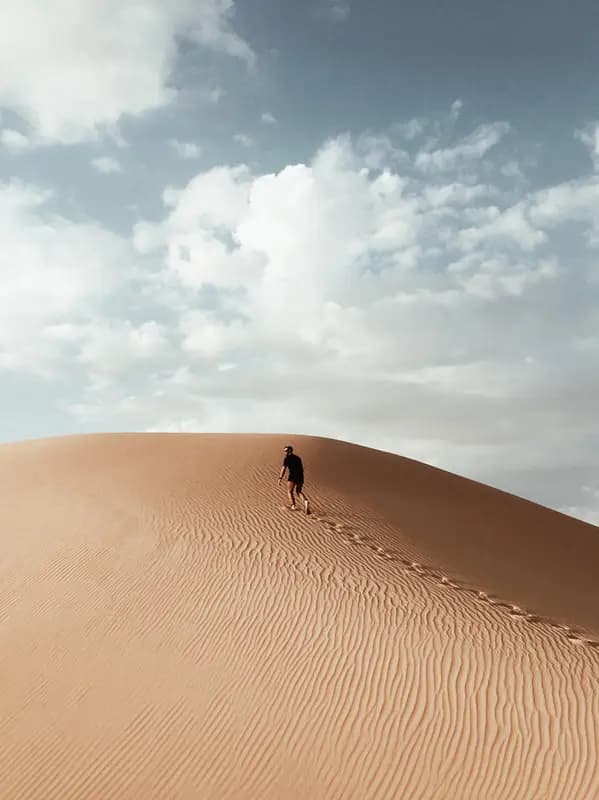
On this exclusive photography trip through Namibia, you will experience the red dunes of the Kalahari, the breathtaking vistas of the second largest canyon in the world, the high dunes of the Namib Desert near Sossusvlei, the coastal town of Swakopmund and Africa's wildlife in Damaraland and Okonjima.
This trip will be led by: Daniel Heilig who speaks Deutsch, Englisch
Location
Where do we go?
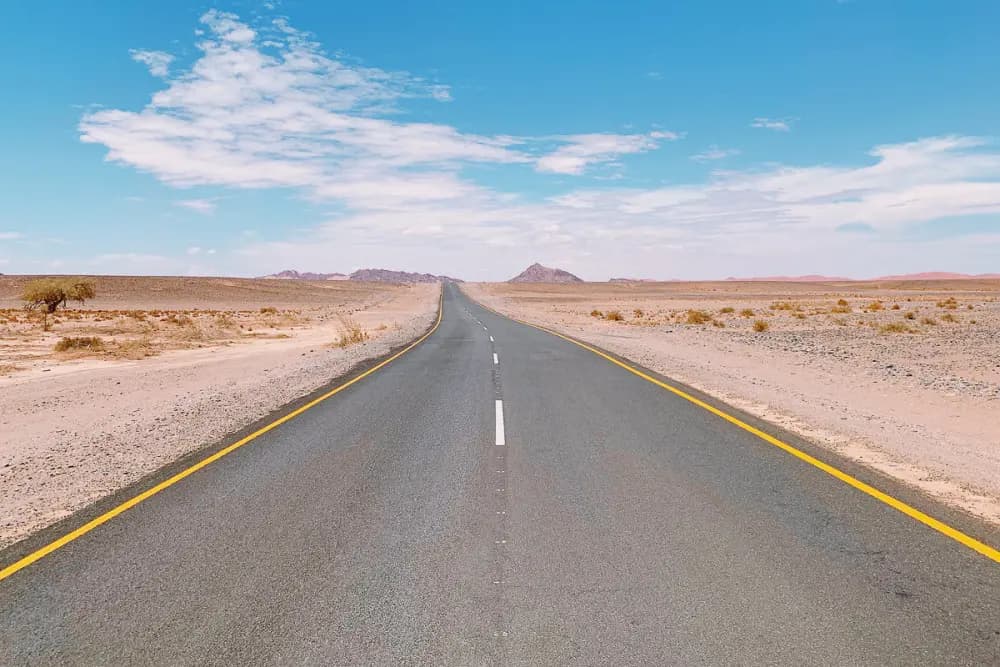
You will travel through the country with an exclusive small group of photographers and explore the most beautiful corners of Namibia. So that you can enjoy the impressive views while driving between the individual spots, a window seat is provided for each participant.
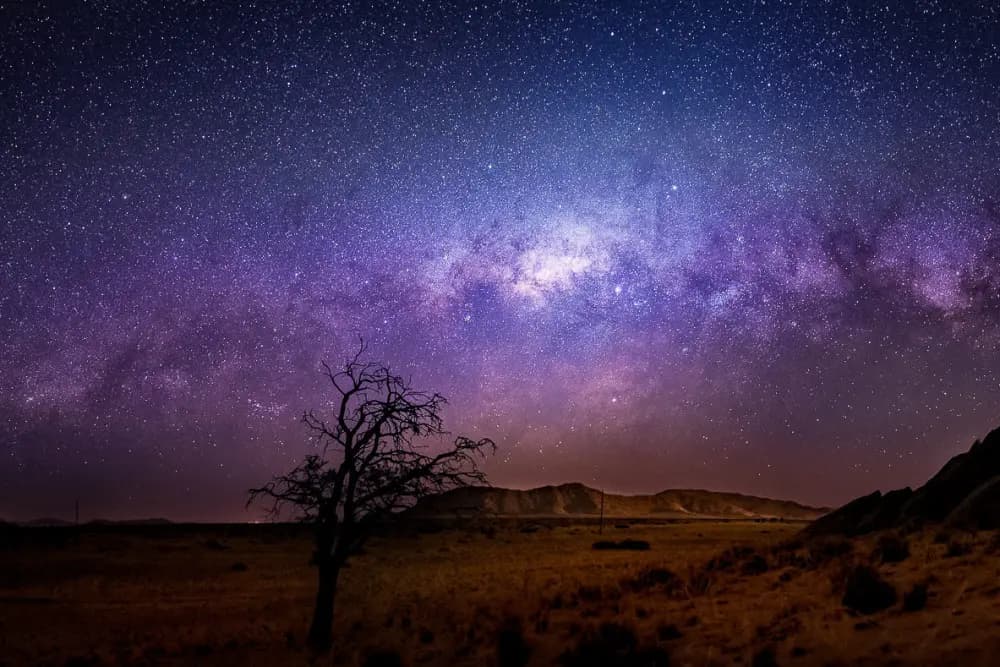
While the focus of the trip is on animal and landscape photography, we have selected the dates to make sure you can also capture breathtaking astrophotos during your visit.
The program includes detours to the Namib and Damaraland and to the private nature reserve of Okonjima. Expect some unforgettable days ahead of you, we are sure you will want to come back here again and again...
Enjoy this once-in-a-lifetime trip with the Namibian tour guide Monika Rohda and the photographer Daniel Heilig and experience breathtaking landscapes day and night!
WHAT CAN YOU EXPECT FROM THIS TRIP?
- The red dunes of the Kalahari Desert
- Night photography under a breathtaking night sky with the famous Quiver Trees
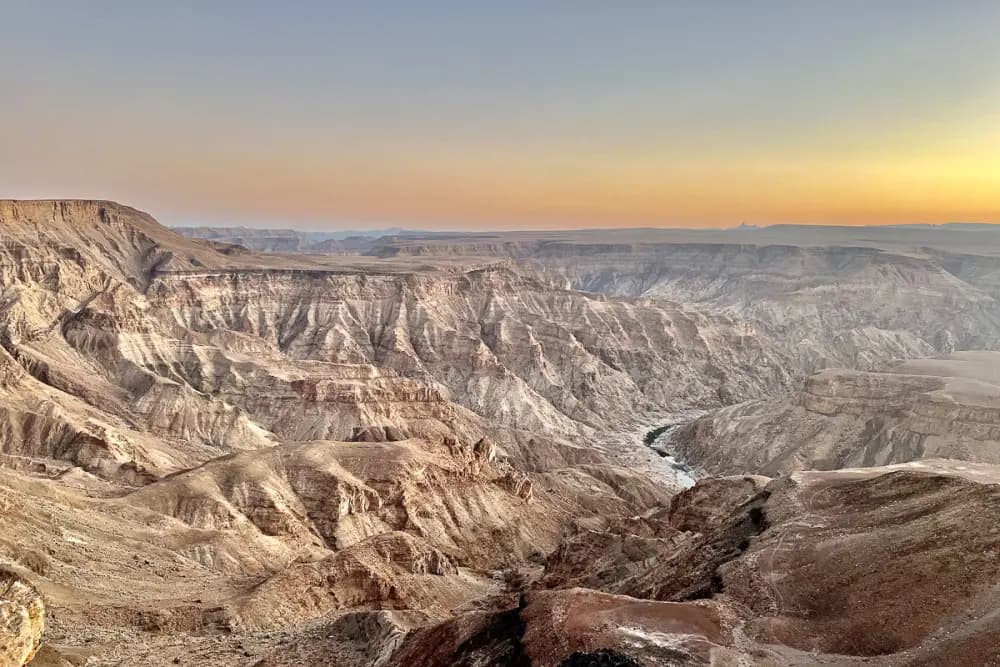
- Landscape Photography: Fish River Canyon - the second largest canyon in the world
- Architecture: Discover the ghost town of Kolmannskuppe and the lovingly maintained buildings of Lüderitz and Swakopmund, which date back to the German colonial period
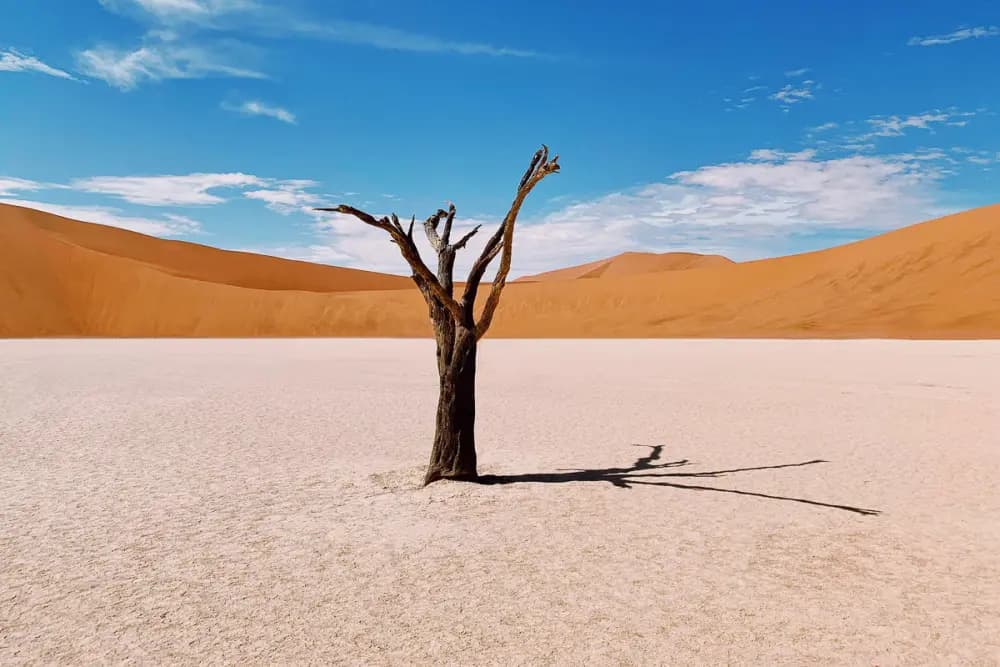
- Sossusvlei and Deadvlei: Discover the highest dunes such as Dune 45, Hiddenvlei, Big Daddy at Dawn and the absolute natural wonder of Africa, the dead trees in Deadvlei
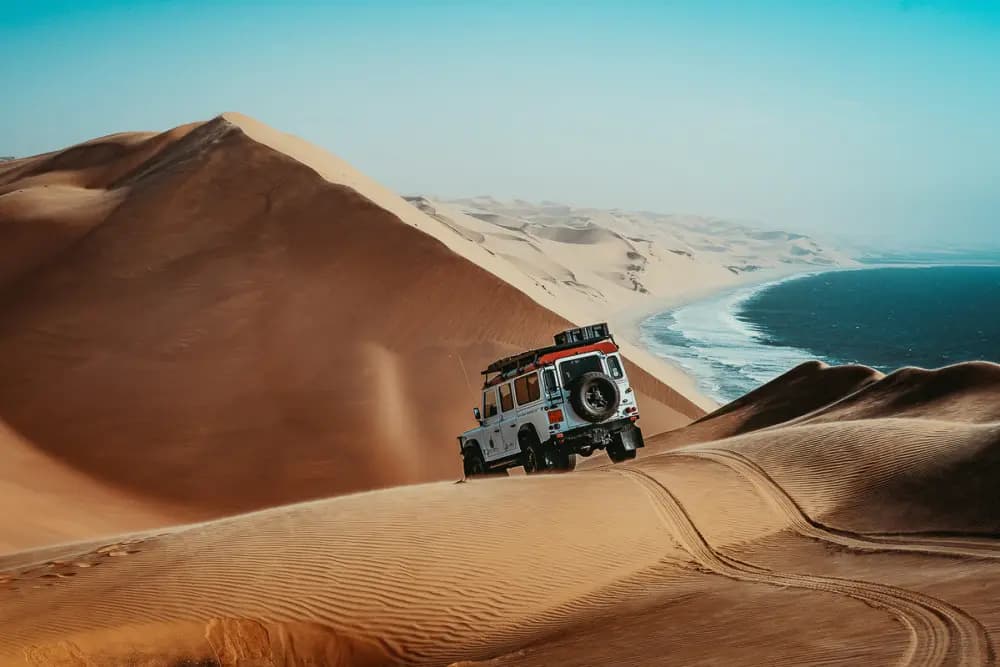
- Sandwich Harbour: A tour through the desert with a fascinating contrast between the dunes and the Atlantic
- Damaraland: In the 4x4 jeep through the dry riverbed to find desert elephants
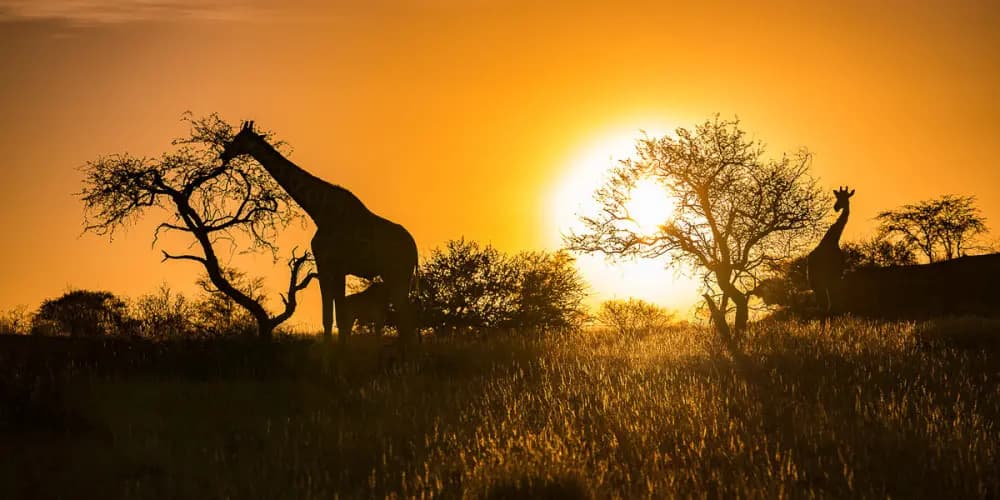
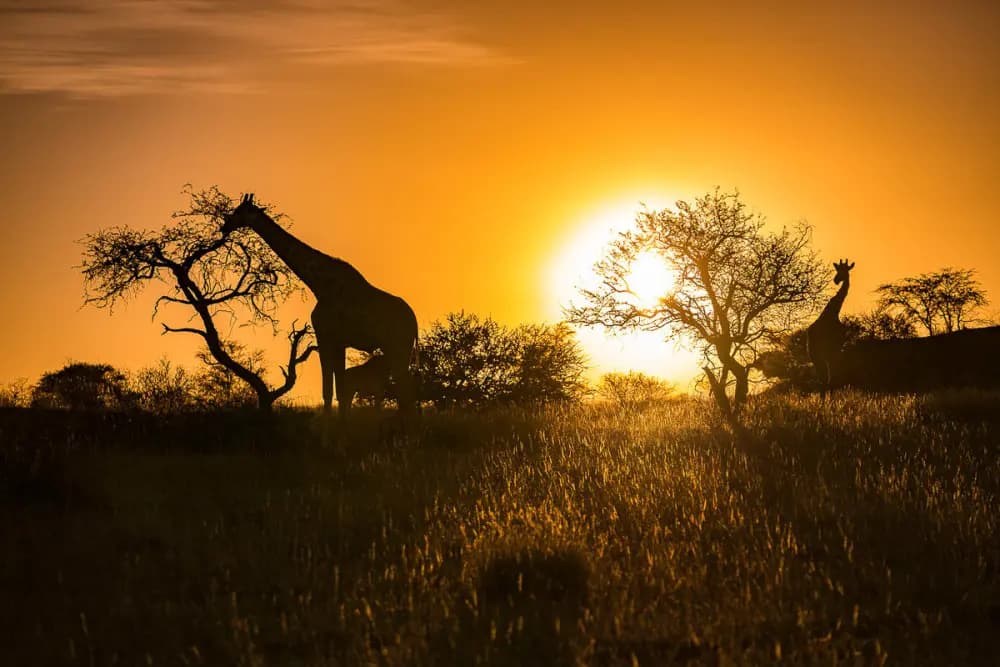
- Wildlife: In the Okonjima Nature Reserve, with a bit of luck, you can see leopards, zebras, giraffes, hyenas and more
Trip highlights
What you can expect from this trip
- Arrival in Windhoek
- Kalahari
- Quivertree Forest Rest Camp, Southern Namibia
- Canyon Village, Fish River Canyon
- Exploration tour around Kolmannskuppe and Lüderitz. Relaxed discussion of the astro-photos that have already been taken as well as tips for improving the image of the Milky Way at night
- Drive to Sesriem, Sossusvlei
- Dead Vlei
- The Desert Sands, Namibia, Swakopmund
- Sandwich Harbour
- Damaraland, Ozondjou Trails
- Desert Elephants
- Okonjima Nature Reserve
- Back to Windhoek Airport
See full itinerary here
Day 1
Arrival in Windhoek
You will arrive at Hosea Kutako (Windhoek International) Airport early in the morning, where you will be welcomed by us. Afterwards we drive directly to our accommodation in Windhoek and the rest of the day is free for you to relax. In between, we'll take a quick trip to the supermarket and buy the last few little things you're missing. In the evening we have dinner together in Windhoek.
Windhoek is Namibia's capital, home to an international airport and a wealth of restaurants, shops, entertainment and accommodation options. The city is clean, and well-organized, with a colonial heritage reflected in its many German restaurants and shops, and widespread use of the German language. Windhoek has an interesting mix of historic architecture and modern buildings, many of which are worth a look, including the Alte Feste (Old Fort), the 1896 Christ Church and the contemporary Supreme Court.
On the banks of the dry Arebbusch, the Arebbusch Travel Lodge is located in the natural environment of the "Veld". Far from the hustle and bustle of central city life, but just minutes from the capital's shopping centers and attractions. Arebbusch Travel Lodge offers a wide range of accommodation in a safe, clean and family-friendly environment.
Day 2
Kalahari
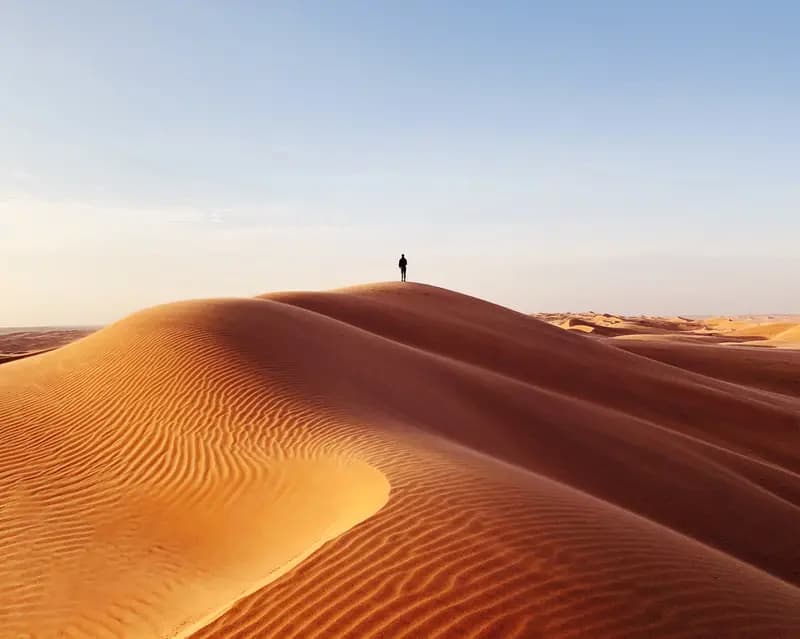
The Kalahari is an exceptionally beautiful residential desert, a large, semi-arid, sandy savannah covered by a gentle inland sea of sand that covers most of Botswana and large parts of Namibia and South Africa. It is also the San people's last base with the modern world having enveloped all other realms they once roamed. Here in Namibia it is typically red sand covered in thin, mostly golden grass and dotted with acacia trees and extensive wildlife such as gemsbok, impala, jackals and cheetah.
After breakfast we stop again at a supermarket so that you can take a few drinks and other things with you on the journey. Then we drive south into the Kalahari Desert. This desert is a large semi-arid sand savannah in southern Africa, extending over 900,000 square kilometers and covering much of Botswana and parts of Namibia and South Africa.
"When you get here, you don't have to look for the Kalahari. The red dunes are here, the camel thorn trees are everywhere and you're just in the middle of it."
Built on a majestic red dune, Suricate Tented Lodge overlooks the pans of the Auob wetland.
Combining the ultimate African safari experience with the comfort and luxury of modern living, the tents leave a lasting impression on all guests.
In the evening, if you want, you can practice taking photos of the starry sky.
Windhoek - Kalahari: 254km approx. 3 hours
Overnight: Suricate Kalahari Tented Lodge
High above the pans of the Auob wetlands is the Suricate Tented Lodge, built on a majestic red dune. Combining the ultimate African safari experience with the comfort and luxury of modern living, the tents leave a lasting impression on all our guests.
Day 3
Quivertree Forest Rest Camp, Southern Namibia
We start the day with a delicious breakfast and then, not too late, set off on the slightly longer route to the quiver tree forest near Keetmanshoop. Enjoy an incredible sunset.
Night photography under a breathtaking night sky with the famous Quiver Trees as a subject.
The Quivertree Forest Rest Camp is located on the Gariganus farm just 13 km northeast of Keetmanshoop on the M29 road, here we offer tourists comfortable accommodation in the middle of an untouched Namibia landscape. At the farm, visitors can explore the ancient and famous Quivertree Forest and the Dolerite rock formations at their leisure.
Included: Overnight stay, dinner, breakfast, park permits (sunrise to sunset)
Day 4
Canyon Village, Fish River Canyon
Three hour drive from Keetmanshoop to Fish River Canyon, the second largest canyon in the world.
Relax at Gondwana's Canyon Village Lodge and explore the area.
Night photo session.
Fish River Canyon
The intermittent Fish River is Africa's largest and the second largest gorge in the world. Hot, dry and rocky, this impressive gorge is 160 km long, 27 km wide and 550 m deep. At the southern end are the famous hot springs of Ai-Ais.
Canyon Village Lodge in Gondwana Canyon Park is only 20 km away from the Fish River Canyon. Enjoy delicious meals in the restaurant and be transported to the pioneer days of agriculture through the carefully arranged décor. Read a book on the tree-shaded patio or relax by the swimming pool overlooking the Fish River Canyon.
The Fish River Canyon is the largest canyon in Africa and attracts many visitors every year. This overlook has beautiful panoramic views of the canyon, where visitors can view the Fish River through sharp corners amid rocky terrain.
Day 5
Exploration tour around Kolmannskuppe and Lüderitz. Relaxed discussion of the astro-photos that have already been taken as well as tips for improving the image of the Milky Way at night
We continue to Lüderitz. A place where it seems as if time has stood still. Lüderitz reveals itself to be a nostalgic, very colorful little town, due to the numerous lovingly maintained buildings from the German colonial period in the Art Nouveau and Wilhelmine architectural styles that were popular at the time. The city is overlooked by the Evangelical Lutheran rock church from 1911 and the Goerke House with its bright blue roof and its magnificent sundial
Lüderitz
This coastal town is an anomaly - a slice of the 19th century bordering the pink dunes of the Namib Desert. Lutheran churches, German bakeries and colonial buildings dot the settlement, while the windswept beaches are home to flamingos, ostriches, seals and penguins. The nearby ghost town of Kolmannskuppe is one of the most fascinating attractions in the area, located about 10 kilometers from Lüderitz.
Kolmannskuppe , the most popular ghost town in Namibia, at least for every visitor and even more so for the photographer. Here time has stood still, but the nature around it has lived on. Located on the southern flank of the expansive Namib Desert, the small town of Kolmannskuppe has been reclaimed by the sand. In Kolmannskuppe you can really let off steam. The abandoned city, slowly but surely being buried by the desert, offers so much to discover, whether it's the swimming pool on the hill, the morbid charm of the hospital or just a wealth of abstract or graphic motifs that give us that A play of light and shadow in the dilapidated houses. I'm sure everyone will be thrilled.
Wild Horses of the Namib
They fight for a life in freedom and have an irresistible fascination: the wild horses of the Namib in southwest Namibia. For centuries their origin was shrouded in mystery. Their habitat, the barren plains around Garub on the eastern edge of the Namib Desert, is no paradise; nevertheless, they managed to adapt to the harsh conditions. Their ancestors, who were once in the service of humans, gained freedom for themselves: a life in the vastness of the Namib, away from human civilization, according to the rules of their own horse society. Perhaps that is the reason for the fascination of thousands of visitors every year.
Day 6
Drive to Sesriem, Sossusvlei
In the morning we set off again towards Aus. The infinity of this landscape with grass savannahs, wide, stony desert plains and the small Koichab dunes. The wild horses also live nearby, which, it is said, were left behind by the former German protection force and have been fighting for survival ever since. With a bit of luck we'll make a photo stop here. The journey continues north, through changing landscape panoramas with wide scree plains, gorges with piled-up volcanic rock walls, a wave-shaped sea of dunes, into the heart of the oldest desert on our planet: the Namib
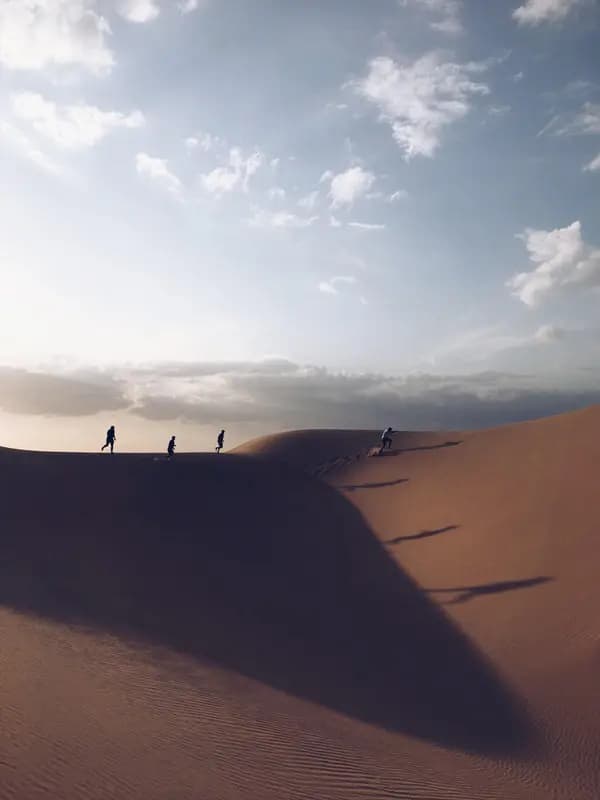
Sossusvlei surrounded by the iconic red dunes of the Namib is our next destination. The clear blue sky contrasting with the huge red dunes makes this one of Africa's natural wonders and a photographer's paradise. Aside from Sossusvlei's attractions - Dune 45, Hiddenvlei, Big Daddy and Deadvlei - other attractions in the area include Sesriem Canyon and the Namib-Naukluft National Park, where the Namib mountains meet their plains.
Lüderitz - Namib Desert Lodge: 555km, 6 hours
Day 7
Dead Vlei
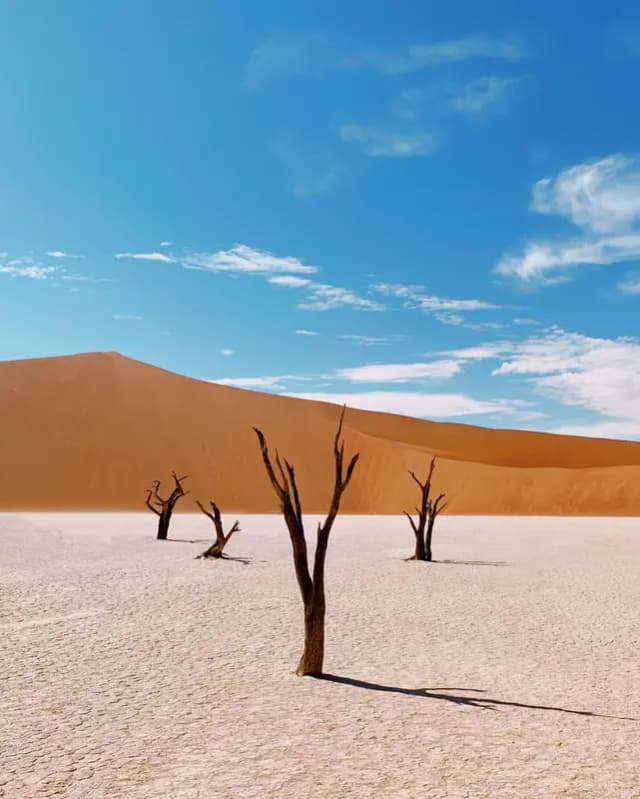
Today we start before sunrise so that we are at the entrance gate of the almost 50,000 km2 Namib Naukluft Park by sunrise. We drive straight to Dead Vlei which is the highlight of every Namibia trip, the dead trees in the morning light have something mystical about them.
Overnight stay: Namib Desert Lodge Gondwana Collection Namibia
The main building and the chalets of the Namib Desert Lodge are spread out at the foot of the petrified dunes of the ancient Namib. A comfortable stay is guaranteed by 65 rooms with bathroom and air conditioning. A restaurant and bar, an inviting terrace with a view of the petrified dunes and two swimming pools invite you to linger and relax. Oryx antelopes and springboks make frequent visits to our illuminated watering hole.
The rooms offer a wonderful view of the vastness of the savannah or the petrified dunes of the ancient Namib. They are equipped with double beds, private bathrooms, air conditioning and a small veranda.
Dead Vlei
This ancient clay pan was once an oasis studded with acacia trees and fed by a river that suddenly changed course, drying the earth with the trees that previously supported it. So dry were the climatic conditions that the trees never decomposed - instead, they were completely leached of moisture, so that today, 900 years later, they remain as dried, blackened sentinels, dotting the cracked surface of the pan. Surrounded by the red-pink dunes of the Namibia Desert, they create a surreal spectacle that is a photographer's dream.
Day 8
The Desert Sands, Namibia, Swakopmund
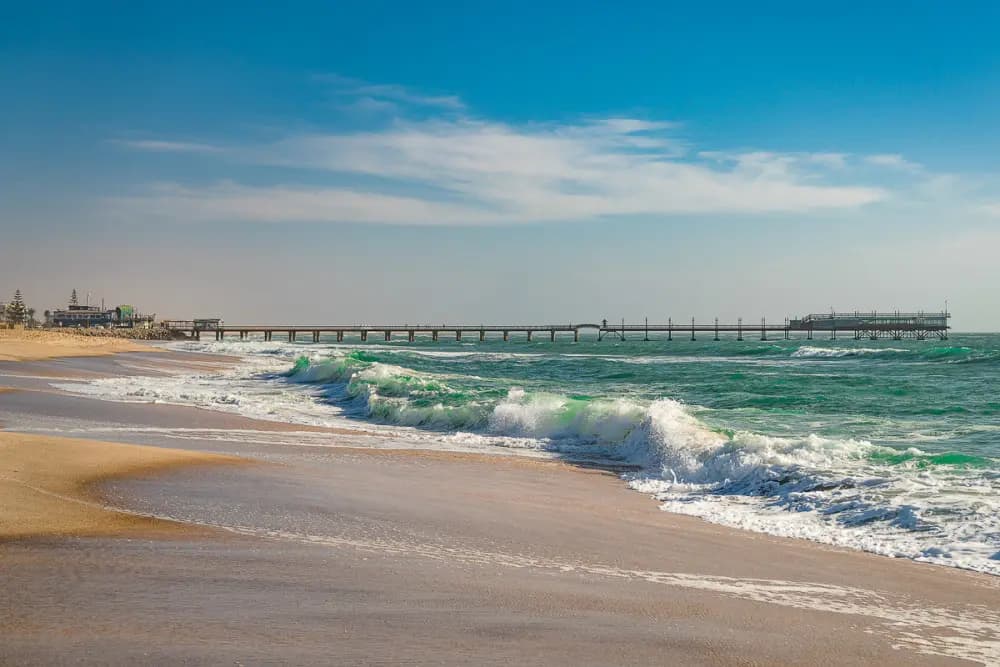
We continue north through the gray-white plains of the Namib Naukluft Park past bizarre landscapes to Swakopmund, a holiday resort located meters between the Atlantic and the dunes. Palm avenues, parks, historic buildings and the refreshingly cool summer weather contribute to the attractiveness of this city. The Desert Sands Hotel is ideally located within walking distance of Jetty Bay with the pier and the stylish rooms are ideal for unpacking and rearranging your equipment. The afternoon is free to explore the city.
Swakopmund
Founded in 1892 as the main port for German South West Africa, Swakopmund is often described as more German than Germany. Now it is a seaside resort. Swakopmund is the capital of the Skeleton Coast tourism area and has plenty to keep visitors happy. The quirky mix of German and Namibian influences, colonial-era buildings and the cool sea breeze make it very popular.
Overnight stay: Desert Sands Boutique B&B
Day 9
Sandwich Harbour
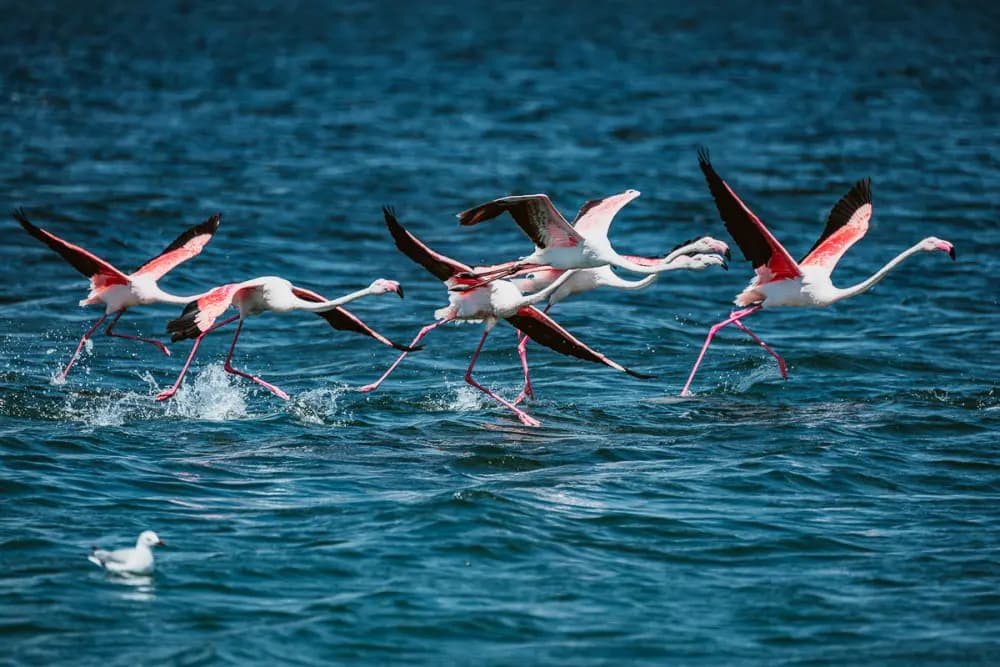
A trip to Sandwich Harbor is not just a special experience for photographers. The drive through the sandy desert is breathtaking and the contrast between the dunes and the Atlantic is always impressive. On the way you can see thousands of seabirds, large groups of flamingos and all in close proximity.
Day 10
Damaraland, Ozondjou Trails
First we follow the coastal road towards Henties Bay. There is a shipwreck between Swakopmund and Henties Bay. The Zeila stranded in the early hours of August 25, 2008 near “Die Walle”, a popular fishing spot about 14 km south of Henties Bay. The fishing trawler, which was sold for scrap to an Indian company by Walvis Bay-based Hangana Fishing, became stranded after becoming detached from its towline while en route to Bombay, India, shortly after leaving Walvis Bay. We continue to Damaraland to our camp in the middle of the red granite rocks.
Day 11
Desert Elephants
Today pachyderms are on the program. Together with a guide, we drive to the dry river areas in Damaraland and look for the desert elephants, who live here in small groups in the middle of a very inhospitable environment. With a bit of luck, we will see the elephants up close and, in addition to the special experience, great photo opportunities are of course almost guaranteed. The trip is offered in an open 4 x 4 vehicle and follows the tracks of the elephants, mostly in the dry riverbed. This is also a good opportunity to meet common plains game such as zebra, kudu, oryx, springbok, ostrich and giraffe.
Ozondjou Trails is located on a small plateau and offers wonderful panoramic views over the Ugab Rivier and the massive Brandberg. Ozondjou is the Herero word for elephant.
Accommodation is in comfortable Meru-style tents with solar lights, en-suite shower, sink and flush toilet. A tent lapa serves as a dining room and lounge. A full English breakfast and a 3-course fire pit dinner are included. Local drinks are included in your stay.
Days 12, 13
Okonjima Nature Reserve
For our final stop we head west to Otjiwarongo to the Okonjima Plains Camp and the Africat Foundation. In the 33,000 hectare wildlife reserve, located in the middle of the Namibian bush, the foundation is primarily dedicated to research into wild leopards, pangolins and the brown hyena. During our stay we will undertake leopard tracking and, with a bit of luck, we will observe the impressive animals up close.
But of course Okonjima doesn't just have cats to offer; in addition to a large number of antelopes and zebras, giraffes, rhinos and a number of hyenas also live in the large nature reserve. The wildlife photographers will get their money's worth. As a special feature, we will spend a sundowner together with cheetahs, so every participant gets photo opportunities that you don't get in front of the lens on normal trips...
Overnight: Okonjima Plains Camp
Not only is Okonjima a luxurious lodge, but also the home of the AfriCat Foundation, a non-profit organization that works for the long-term conservation of Namibia's large carnivores, especially cheetahs and leopards. A visit to Okonjima gives you the opportunity to get a good insight into the AfriCat Foundation and its research work. The Plains Camp design honors Okonjima's ranching history when Okonjima was still a cattle ranch.
Day 14
Back to Windhoek Airport
The days have passed in no time and so today it's time to pack our bags and say goodbye... We make our way back to Windhoek Airport. In the evening, a plane will take you back home overnight, enriched with many exciting impressions and experiences of the past few days and certainly some great photos.
Accommodation
Where do we stay?
AREBBUSCH TRAVEL LODGE | WINDHOEK:
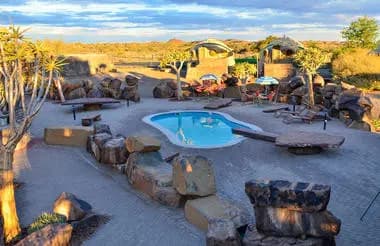
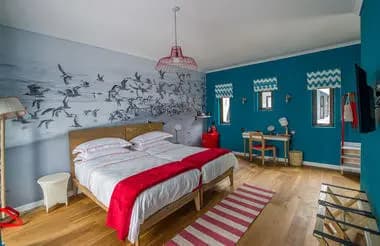
Arebbusch Travel Lodge offers quality accommodation at affordable prices in a natural setting in Windhoek - a gateway to the many wonders of Namibia with beautiful expansive spaces, with the fascinating diversity of cultures, nature, wildlife and majestic sunsets. On the banks of the dry Arebbusch, the Arebbusch Travel Lodge lies in the natural surroundings of the "Veld". Far from the hustle and bustle of central city life, but just minutes from the capital's shopping centers and attractions. Arebbusch Travel Lodge offers a wide range of accommodation in a safe, clean and family-friendly environment. Accommodation types include luxury accommodation, standard rooms, 2-6 bed self-catering accommodation and caravan/campsites. All accommodation can be booked on either a B&B or self-catering basis. There is also a restaurant with a fully licensed bar. There are also 2 swimming pools. Other facilities include a laundry service, Internet access and a reception to provide assistance.
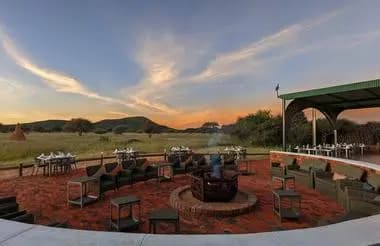
BAGATELLE KALAHARI GAME RANCH | KALAHARI NAMIBIA
The lodge is located on the edge of the southern Kalahari in a mixed tree and shrub savannah. The ranch lies within huge, red sand dunes that run parallel and in a northwest to southeast direction. This "African spirit" atmosphere, combined with service, grace and charm, in an unashamedly luxurious setting, will be the hallmark of this establishment, offering excellent value for money and unforgettable memories for the discerning traveler.
QUIVERTREE FOREST REST CAMP | SOUTHERN NAMIBIA
The Quivertree Forest Rest Camp is located on the Gariganus farm just 13 km northeast of Keetmanshoop on the M29 road, here we offer tourists comfortable accommodation in the middle of an untouched Namibia landscape. At the farm, visitors can explore the ancient and famous Quivertree Forest and dolerite rock formations at their leisure.
FISH RIVER LODGE | SOUTHERN NAMIBIA
Fish River Lodge in southern Namibia is the only lodge directly on the edge of the Fish River Canyon, offering guests breathtaking views of the canyon from sunrise to sunset. Witness first-hand the geological forces that unfolded 300 million years ago when the Fish River began etching its way through hard quartzite, forming a canyon 90 kilometers long, 549 meters deep and 28 kilometers wide in places making it the second largest canyon in the world. The 45,000 hectare Canyon Nature Park is a natural sanctuary for the Karoo's succulent plants and native wildlife. Incredible hiking trails wind into the heart of the canyon, offering guests spectacular scenery combined with 75 km of river frontage consisting of existing waterholes and rock pools that support Hartman's zebra, kudu, oryx, springbok and many other smaller and endemic wildlife species Attract birdlife.
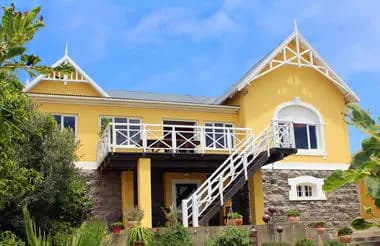
OLD VILLA | LUDERITZ
Alte Villa is located in Lüderitz, Namibia. Activities such as fishing, hiking and windsurfing can be enjoyed in the surrounding area. The rooms offer sea or garden views, a desk and a private bathroom with a bath or shower. This guest house offers free WiFi, a shared lounge with a fireplace, a lush garden and a terrace. Enjoy a drink and fresh seafood at the on-site restaurant.
DEAD VALLEY LODGE | SESRIEM
Dead Valley Lodge is located next to the main entrance in Namib-Naukluft National Park, between Sesriem campsite and Elim Dune on the way to the world-famous Sossusvlei and Dead Vlei. This oasis offers panoramic views of the Namib Desert with towering red sand dunes, rugged mountain ranges and arid desert savannahs.
Each of the 20 detached luxury chalets is air-conditioned and equipped with double beds, power sockets, a private terrace, a kitchenette and a detached bathroom with toiletries. Enjoy the world-class restaurant serving delicious Namibian cuisine, relax in the quaint bar with a cold drink after a day of activities, or cool off in the outdoor pool overlooking the Elim Dune.
The eco-friendly design and architecture of the lodge was truly inspired by Sossusvlei and with its own entrance into the Namib-Naukluft National Park, making Dead Valley Lodge one of the closest lodges to Sossusvlei pan. The lodge offers morning and afternoon game drives to Sossusvlei and Sesriem Canyon.
THE DELIGHT SWAKOPMUND GONDWANA COLLECTION NAMIBIA | SWAKOPMUND
Among the city's fascinating contrasts and ancient traditions, Gondwana's Delight is a breath of fresh air in the desert. Conveniently located just a few minutes' walk from the 'Mole', this modern, uplifting and welcoming hotel is the ideal base for your stay. From the hotel's easy convenience to the warm and welcoming service, Gondwana is known for supporting experienced Delight hosts for everything from activity bookings to dinner reservations - your stay is always an effortless and memorable experience. The Delight has 54 rooms, 10 of which are family rooms. There is a breakfast room, a cozy bar, a garden and secure parking. The hotel is centrally located and is an easy walk from the center.
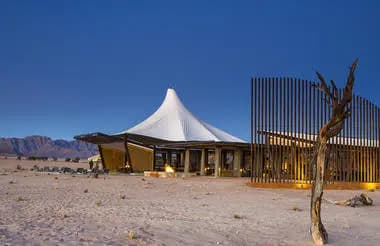
OZONDJOU TRAILS | DAMARALAND
The intimate Ozondjou Trails are located on a small plateau and offer wonderful panoramic views over the Ugab and the massive Brandberg. Ozondjou is the Herero word for elephant.
Accommodation is in comfortable Meru-style tents with solar lights, en-suite shower, sink and flush toilet. A tent lapa serves as a dining room and lounge. A full English breakfast and a 3-course fire pit dinner are included. Local drinks are included in your stay.
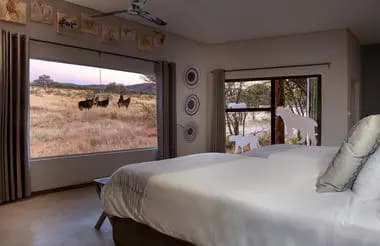
OKONJIMA PLAINS CAMP | OKONJIMA NATURE RESERVE
Not only is Okonjima a luxurious lodge, but also the home of the AfriCat Foundation, a non-profit organization that works for the long-term conservation of Namibia's large carnivores, especially cheetahs and leopards. A visit to Okonjima gives you the opportunity to experience some of AfriCat's work. The NEW, Plains Camp design honors Okonjima's ranching history. In the early 1920s, Okonjima became a cattle ranch and was purchased by Val (VJ) and Rose Hanssen in 1970. They were well-established Brahman breeders and bred to vitalize livestock until the need for solutions to increase livestock numbers escalated and post-independence interest in Namibia as a tourist destination escalated. In 1993, the herds of Brahman and Jersey cattle that were the source of Okonjima as well as the Carnivore Conservation were sold! STANDARD ROOMS: Each of the 14 standard rooms have a view over the Okonjima grass plains! VIEW ROOMS: The 10 exclusive and spacious view rooms, all have a view over the Okonjima grass plains! OKONJIMA's activities include searching for rehabilitated carnivores on foot; Visit to the AfriCat Carnivore Care & Information Center; Search for the leopards from a game vehicle.
Included
- 13 nights in accommodation
- 13 x breakfast
- 9 x dinner
- 2 x airport transfers
- German/English speaking guide & driver
- Photographic services from Daniel Heilig
- Tour vehicle (9-seater Landcruiser 4x4) or similar
- fuel
- Vehicle insurance
- Parking fees
- Activities as per itinerary.
Not included
- Your fligths from / to Windhoek
- Travel insurance
- Optional Activities Meals and drinks not included
- Tips
- Personal expenses.
Your instructor

Daniel Heilig
Daniel HeiligLanguage: Deutsch, Englisch
It is all about connecting – that is what photography stands for. Daniel’s first camera ever was actually an Apple iPhone 3G S. Starting in 2014, mobile photography has helped him to gain an easy and playful access to photography and to express his strong design sense and intuition for aesthetics. Ever since, Daniel wants to connect people with their environment to illustrate the soul of a place. By using all kinds of compositional and harmonic elements such as lines, forms, patterns, light and proportions, Daniel playfully educates the viewer that beautiful and artsy moments can be found everywhere and at any time. In his approach as a quiet photographer, he mindfully observes the environment to capture random occurring and fleeting moments. Putting his captured impressions into a temporary spotlight, visually isolated from the surrounding chaos, he carefully masters the balancing act of getting an aesthetical interpretation without creating a posed appearance and highlighting the surprisingly appealing strangeness of a place. As part of this concept, he intentionally uses his smartphone only. For Daniel, it is crucial that mobile photography is immediate and reactive and allows him to create visual stories and sensitive insights without disturbing the environment. In 2019, some of his work has been shared by Apple and Adobe. In addition, his work has been awarded at the International Photography Awards (Smartphone Category) and as Grand Prize Winner of the Mobile Photography Awards. One of his pictures, taken with his iPhone, made it to the Shortlist of the renowned Sony World Photography Awards.